Mission
Neurology Networks tries to offer broad exposure to various topics that may be presented on the veterinary neurology board exam.
Pathophysiology 1
Q. Identify the pathophysiology underlying the weakness associated with botulinum toxicosis.
- Causes membrane leakage of calcium leading to hyperpolarization of the neuronal cell.
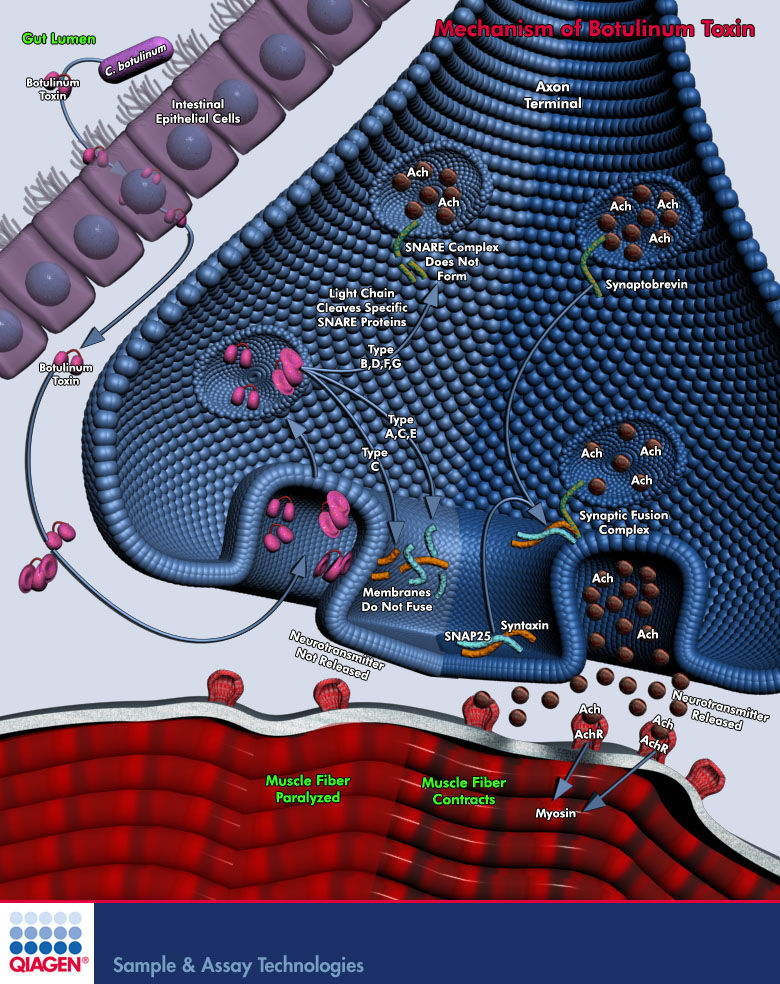
- Inhibits acetylcholine release into the neuromuscular junction by binding irreversibly to presynaptic nerve endings.
- Inhibits acetylcholinesterase at the neuromuscular junction.
- Prevents release of glycine and GABA by cleaving synaptobrevin II in the presynaptic neuron.
- Blocks post synaptic acetylcholine receptors to interrupt neuromuscular transmission.
A. (b) Inhibits acetylcholine release into the neuromuscular junction by binding irreversibly to presynaptic nerve endings.
Clostridium botulinum produces 7 potent neurotoxins. The type associated with botulism in dogs is type C (BoNT/C). The toxin can be absorbed from ingested food or from wounds. The toxin is absorbed into the bloodstream and transported to the muscles. The neurotoxins inhibit acetylcholine release into the neuromuscular junction by binding irreversibly to presynaptic nerve endings, and causing enzymatic cleavage of cholinergic vesicle shuttle proteins. BoNT has a generalized effect on the neuromuscular junction involving both striated and smooth muscles. This results in rapid, progressive, symmetric, LMN paresis accompanied by cranial nerve abnormalities and disruption of the parasympathetic system without sensory deficits.
“Botulism in 2 urban dogs”
Uriarte et al
Can Vet J 2010;51:1139–1142